


Having been born into a farming family, with his father and grandfather linked to agriculture, José Manuel Mora studied Agricultural Engineering and after working for several cooperatives in the province of Valencia, today he advises and provides technical support from the Agricultural Supplies Cooperative in Torrent.
He believes the future of agriculture lies in modernization and biotechnology, given the current EU reduction in active plant protection products—an agricultural sector that will have no place for "the weekend farmer who doesn't want to spend money." But above all, he values the biotechnological solutions of EDYPRO The result in terms of fruit quality and the technical support of its manager and technical director, Vicente Puchol, who "makes sure that his products meet your needs.".
- How did you become part of the world of agriculture, and what has been your training and professional evolution since your beginnings?
I am an Agricultural Engineer. I did my final year project at Anecoop. Through Anecoop I started working at the Real de Montroy Cooperative, and since I'm from Torrent I started working at the L'Horta Cooperative Consortium in that town.
After that, I joined the Agricultural Supplies Cooperative, which is also based in Torrent. Since I valued the distance from home and the family aspect, I've been working here as a technical manager since 2016. We're a cooperative that doesn't sell fruit, only agricultural supplies and services.
In my family, my father and grandfather were farmers, and I have always been involved with cooperatives and agriculture.
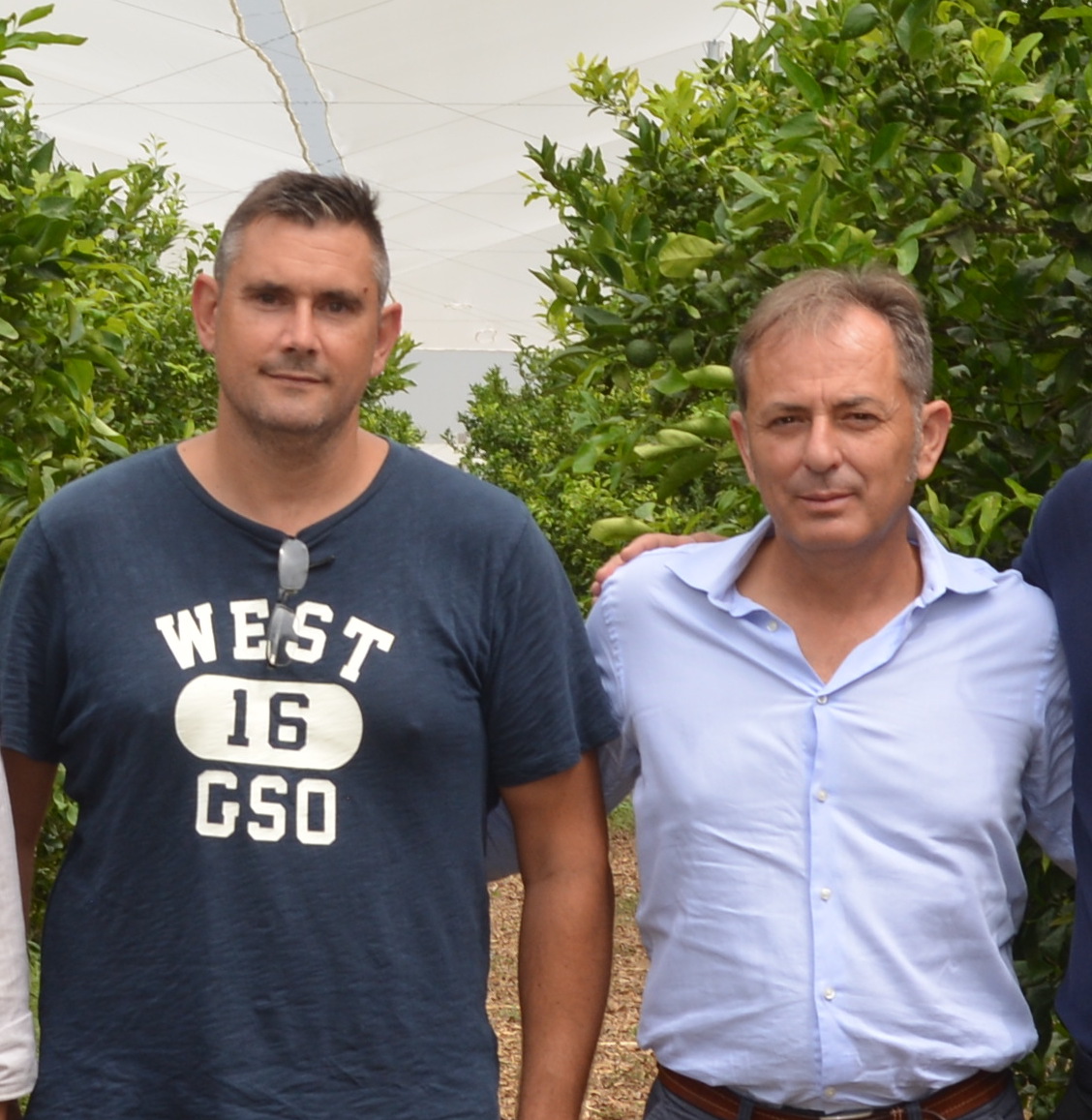
- How long have you known EDYPRO and its products, and what was this first contact like?
Even back when I worked at the Consortium of Cooperatives of l'Horta, there was a close relationship with the company. We were good customers, and I was already familiar with their products. EDYPRO.
And when I was a student doing an internship at Citruscoop, I was already familiar with the solutions of EDYPRO. The relationship between Citruscoop and EDYPRO It's easily been the case for about 15 years, practically since the creation of EDYPRO as a company.
- What do you think biotechnology brings to agriculture?
Today, for me, it's the only way forward because the use of phytosanitary treatments and fertilizers is becoming increasingly restricted, so we have to turn to more specific products where similar or better results can be achieved with lower doses.
- What technical aspect would you highlight about EDYPRO's biotechnology solutions?
The products we use most are primarily for citrus farming, and I must say they work well for me and meet my needs. They ensure healthy trees, good fruit quality, and fruit that meets today's standards.
- At the company level, what factors make trust in EDYPRO's biotechnological solutions so decisive?
The technical support from Vicente Puchol is an added bonus. Perhaps the same product, without the right people behind it to answer your questions and advise you on which product to use when, is an important factor that other companies lack. He's not just someone who sells you his products; he makes sure they meet your needs.
- Which EDYPRO solutions do you use most often and would recommend as standing out among other biotechnology companies?
We spend mostly ORGANOVITAL PLUS , at the root level for tree stimulation and for foliar treatments ENDOPHOSPHITE It's a product that works very well for me for skin preservation and ZIMA L MAX , corrector of Zinc and Manganese deficiencies. REGENERATION PLUS COUPÉ We've been using it for a few years now. The fact that it's certified for organic production also helps to close the crop cycle.
- What aspects would you highlight in the crops after the use of EDYPRO biotechnological solutions?
Above all, and in general, the quality of the fruit: size and firmness. Because ultimately, what you're looking for is good quality fruit, but also for the tree to be in a condition to continue producing the following year, and that's what we're achieving.
- How do you envision agriculture in about ten years?
It's complicated, but increasingly specialized and professionalized. Small farmers will disappear, and in theory, service companies that consolidate land will fill that gap, but the path to profitability is yet to be realized, so we must optimize our resources.
There's been a purge going on for the last five to seven years. The weekend farmer who doesn't want to spend money, who doesn't want to change varieties, is already doomed. It's difficult to sustain citrus farming this way; in my case, it has to be people who handle larger volumes and are more specialized.
- Do you believe that the future of agriculture is biotechnology?
In recent years, agriculture has undergone a significant shift in this regard. Many platforms now advocate for Zero Residue and aim for the majority of production to be Zero Residue. This inevitably involves biotechnology; in terms of plant protection, we have fewer and fewer products available. Two are phased out, and only one new one emerges. Therefore, the trend is clear: agriculture must become increasingly technical, utilizing biotechnological products and relying less and less on mass pesticide treatments.

