




Description
ROOT RICE It belongs to a new generation of residue-free, seed-specific nutrients and is essential for achieving high yields and preventing rooting failures. Its application aids germination under adverse weather conditions caused by low temperatures and other unfavorable climatic factors, such as insufficient light. Furthermore, it promotes the fixation of atmospheric nitrogen by nitrogen-fixing bacteria, increasing crop yield.
ROOT RICE It provides the necessary nutrients for the seed to begin the germination process vigorously. Its action standardizes the vegetative development of the crop in its early stages. ROOT RICE It is essential in the PRECISION AGRICULTURE of the present and the future.
ADVANTAGES AND BENEFITS OF ROOT RICE:
- ROOT RICE It requires a 20% reduction in seed volume/ha to avoid excessive plant density per m³2.
- Optimizes the energy capacity of the seed's genoplasm.
- It aids germination in adverse climatic conditions caused by lack of temperature and other unfavorable climatic factors such as, for example, lack of light.
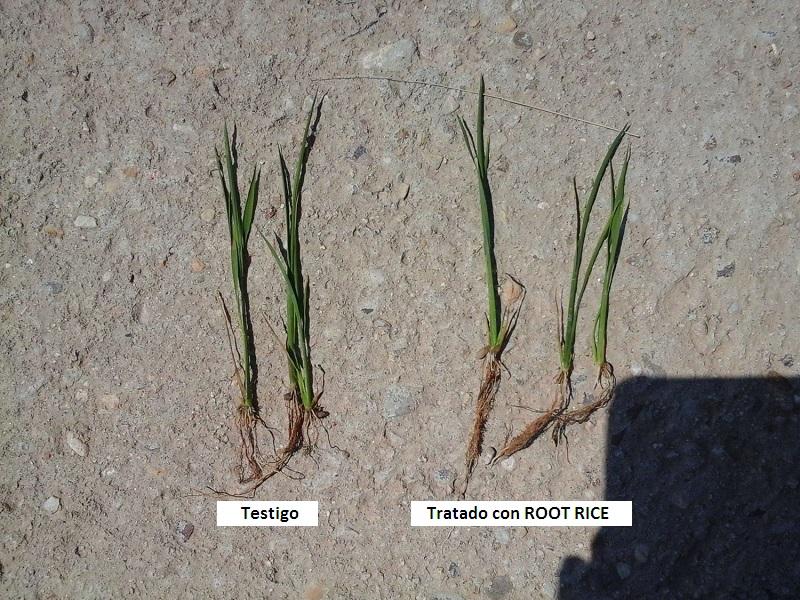
- ROOT RICE It provides a rapid and extensive development of the root system, allowing plants to remain fixed in the soil without being affected by winds (which end up uprooting many plants and preventing their establishment).
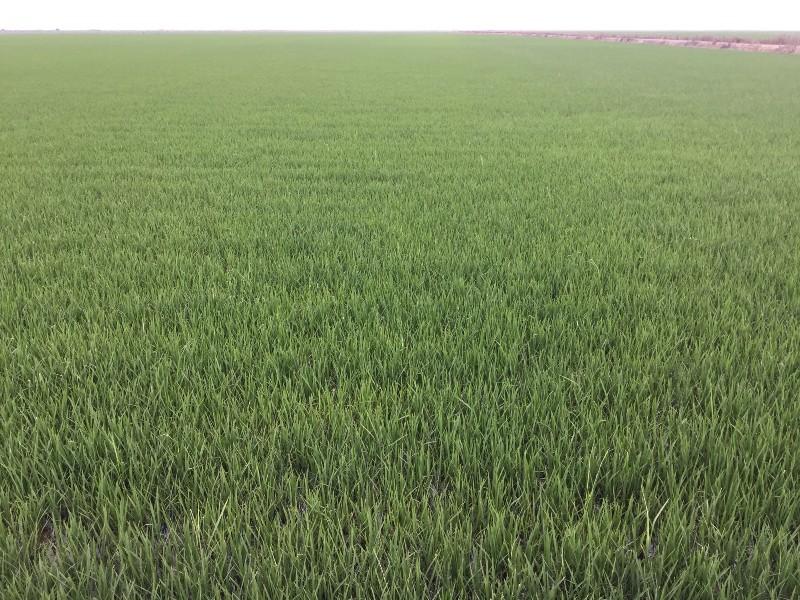
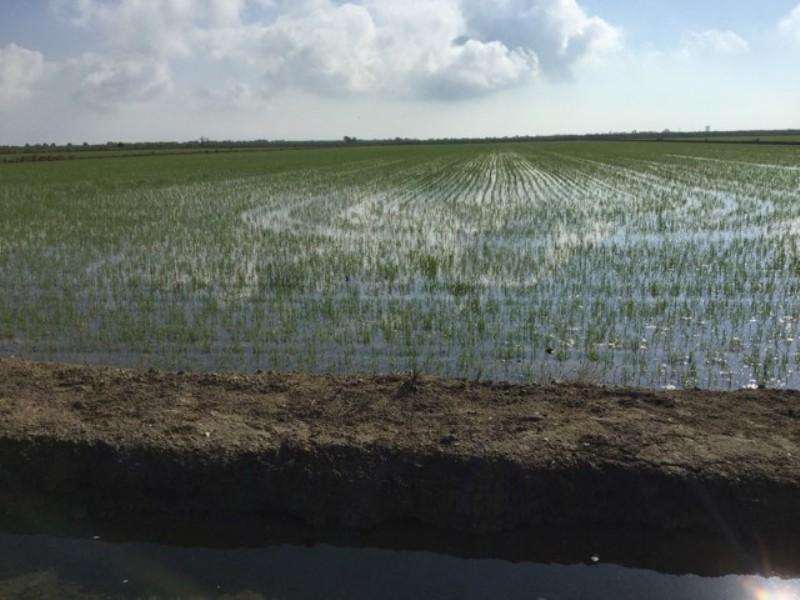
- With the rapid development of germination, the surface of the crop is covered in a few days, and when the water is no longer visible, aquatic birds tend not to land in the applied areas.
- In early sowings with ROOT RICE Rapid development is achieved, and by the time of Chironomid attacks, the plant is already in a very advanced phenological stage and out of risk of suffering attacks from them.
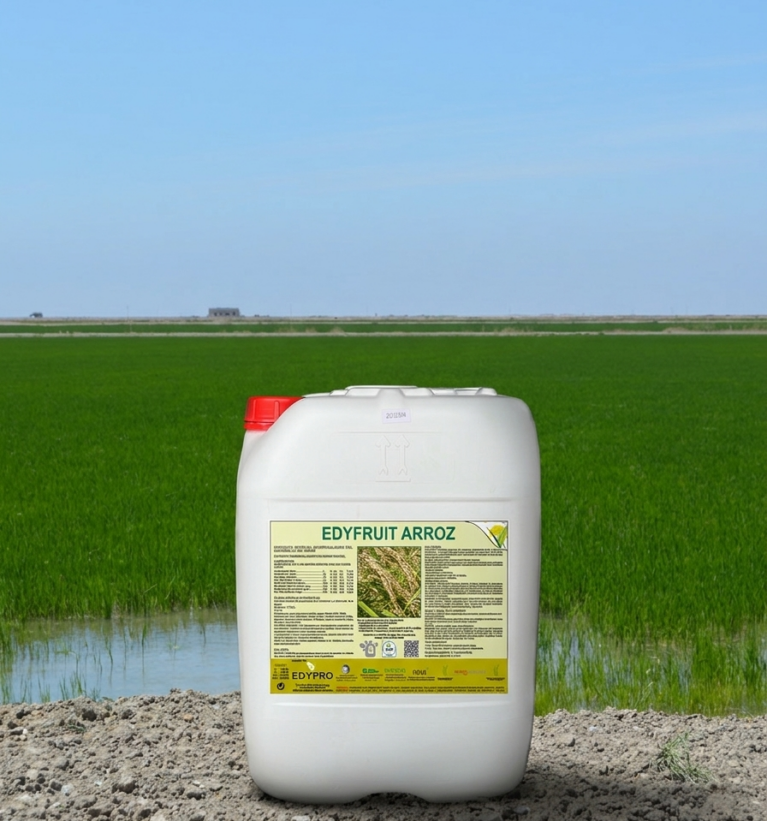
- ROOT RICE It is the most effective basis for increasing yield and production in rice cultivation, and if combined with EDYFRUIT RICE The physiological improvement of the crop is significantly increased.
IMPORTANT: The application of ROOT RICE It promotes continuous and consistent root and foliar development in the rice plant, reaching a level similar to that of weeds. This allows for the earlier application of herbicides to control weeds at an early stage. Furthermore, it ensures that the rice plant better withstands the phytotoxicity that herbicides cause to its immune system, which ultimately destroys part of the root system.