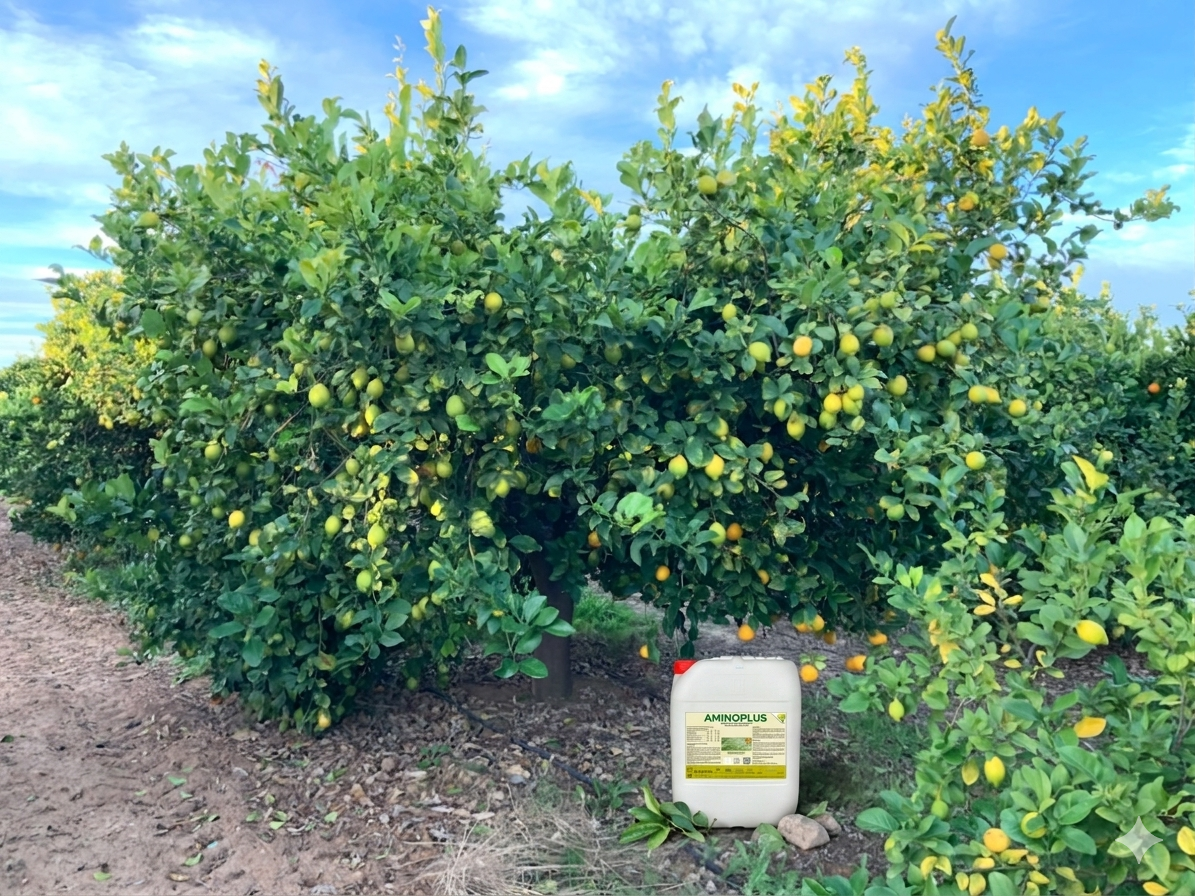


PROBLEM
If our goal is to have a good harvest and excellent quality, We need to take advantage of the first flowering, which will give us top quality fruit.
At this time we can already see how the citrus budding is progressing and we will make decisions based on this to correct the situation if the forecast is unfavorable.
Below, we demonstrate the three possible types of spring budding that determine the harvest:
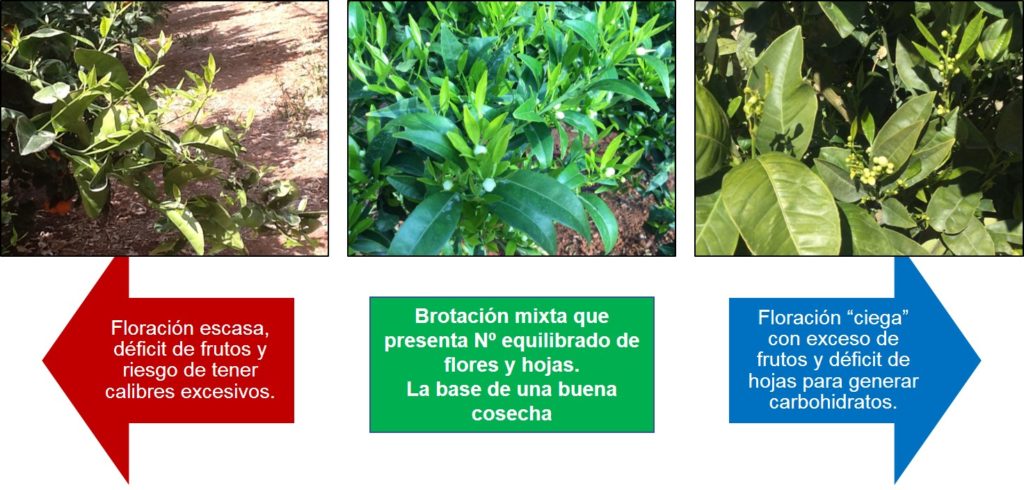
- In the case of sparse flowering, We need to enhance fruit set to take advantage of the flowers from the 1st, 2nd and 3rd flowerings, which will give us a disparity in size and quality.
- In the opposite situation, when we have shoots with many flowers and few leaves (“blind flowering”) what we will have is an excess of fruit which will cause competition between the organs and in order to achieve a good size we will be forced to perform manual thinning.
- The mixed budding It is the perfect base for obtaining an optimal harvest and fantastic quality, because each flower comes with leaves that will supply the necessary carbohydrates for the fertilization and fattening of the fruit.
SOLUTION
From EDYPRO we recommend applying AMINOPLUS, Our plant growth bioregulator's main function is to balance bud break to achieve mixed bud development. At the same time, it promotes rapid bud development and increases leaf area.
AMINOPLUS It is a powerful plant-based stimulant vitamin M It is accompanied by a special amino acid profile developed specifically for citrus cultivation. This profile is designed to create a harmonious synergy in plant function.
Its fantastic capacity for action creates the perfect vegetative balance and optimal sprouting in citrus crops that suffer from alternate bearing or unbalanced flowering.
AMINOPLUScombines the advantages of Free amino acids combined with organic matter, vitamin M, and various microelements (Iron, Manganese, Molybdenum, and Zinc). Vitamin M is a bio-regulator of plant growth. It facilitates the assimilation of nutrients by the plant.
It should be applied in pre-flowering, carrying out two treatments, the first at the beginning of budding, in green bud and the second, fifteen days later.
RESULT
This will result in an induction of the crop to flowering, increasing the number and quality of the flowers.