

PROBLEM
We are increasingly encountering difficulties in cultivation due to salinity in either the soil or the water. Salts inhibit root system development and eventually burn the root hairs and secondary roots, all of which impairs the plants' ability to grow.
Two types of salts accumulate in agricultural soils:
- The mineral salts from fertilizers which, due to a lack of cation exchange in the soil, pass into primary forms and, not being assimilated by plants, accumulate in the soil in the form of toxic salts.
- Toxic salts (sodium and chloride ions) that are typical for lands that were formerly sea or supplied by irrigation waters.
The droughts we are experiencing in the Mediterranean region are causing water degradation and increasing soil salinity. This is leading to critical situations like the one seen in the images taken on April 15th in the southern part of the Region of Murcia.
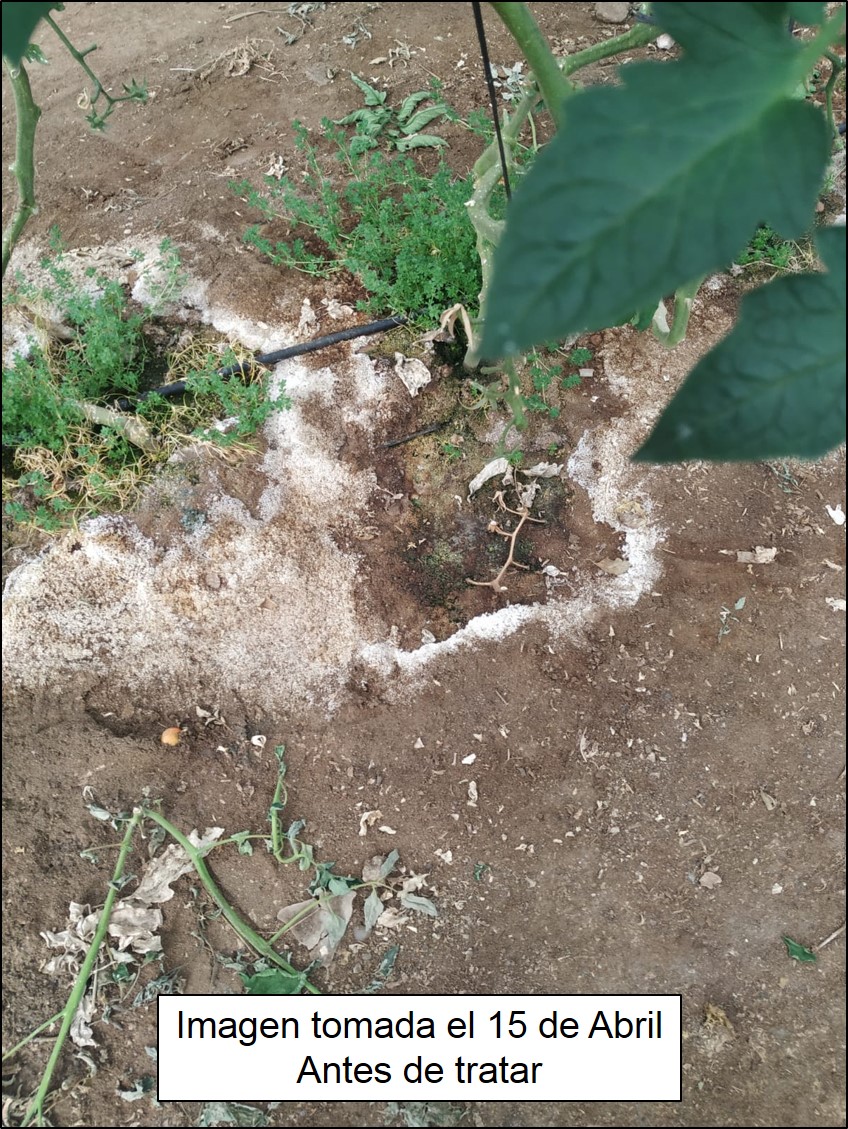
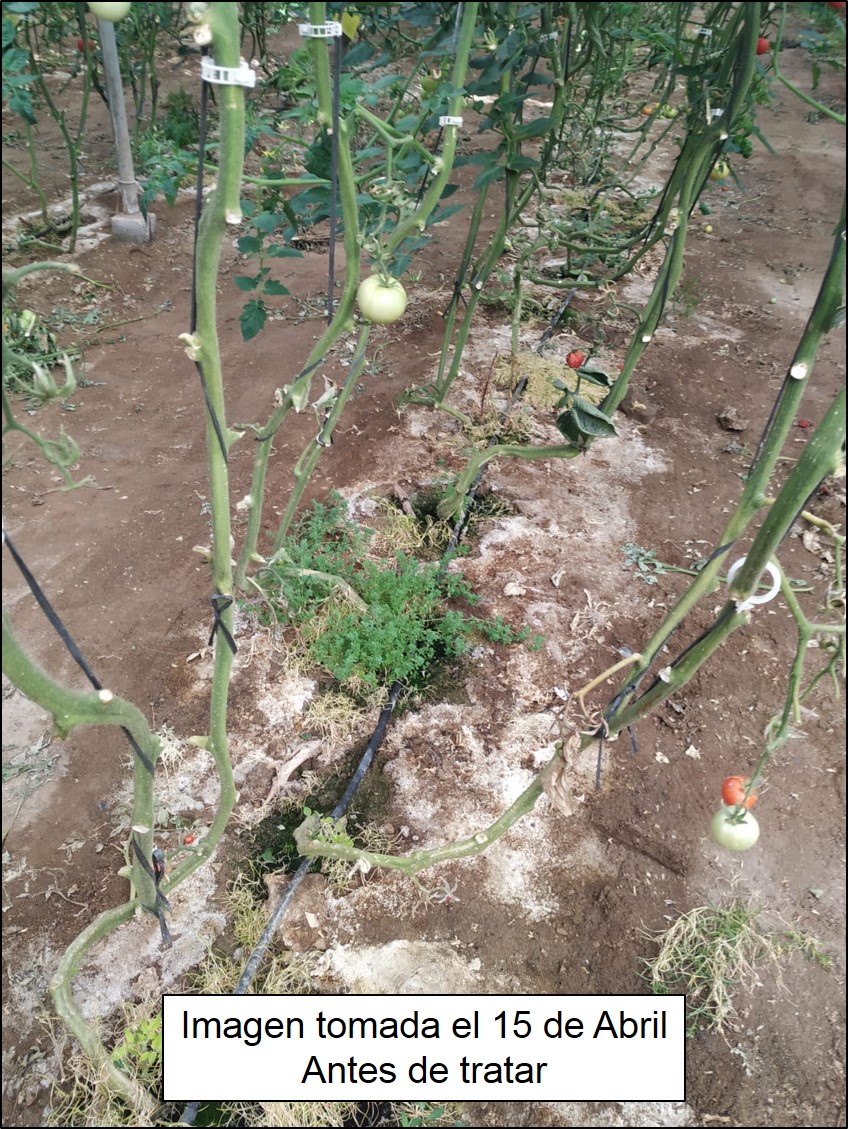
Not only can you see the layer of salt that accumulates on the margins of the drip irrigation bulbs, but also symptoms of plant weakness:
- Very thin trunk which implies a low potential for raw sap transit.
- Fruits in a state of thickening, very whitish, which demonstrate a calcium deficiency and difficulties in fattening up and generating tissue of good consistency and quality.
- Small leaves with reduced capacity for daily photosynthesis.
SOLUTION
Our technical assistant recommended performing these applications COUPÉ REGENERATION Plus:
- 1st application April 16 COUPÉ REGENERATION Plus 60 L./ha.
- 2nd application May 3rd COUPÉ REGENERATION Plus 40 L./ha.
These applications allow us to rapidly regenerate the soil's own microbial flora and increase cation exchange, contributing to the transformation of mineral salts into an assimilable form. At the same time, they free the clay-humus complex of toxic salts by displacing sodium ions and toxic salts from the upper soil horizon.
RESULT
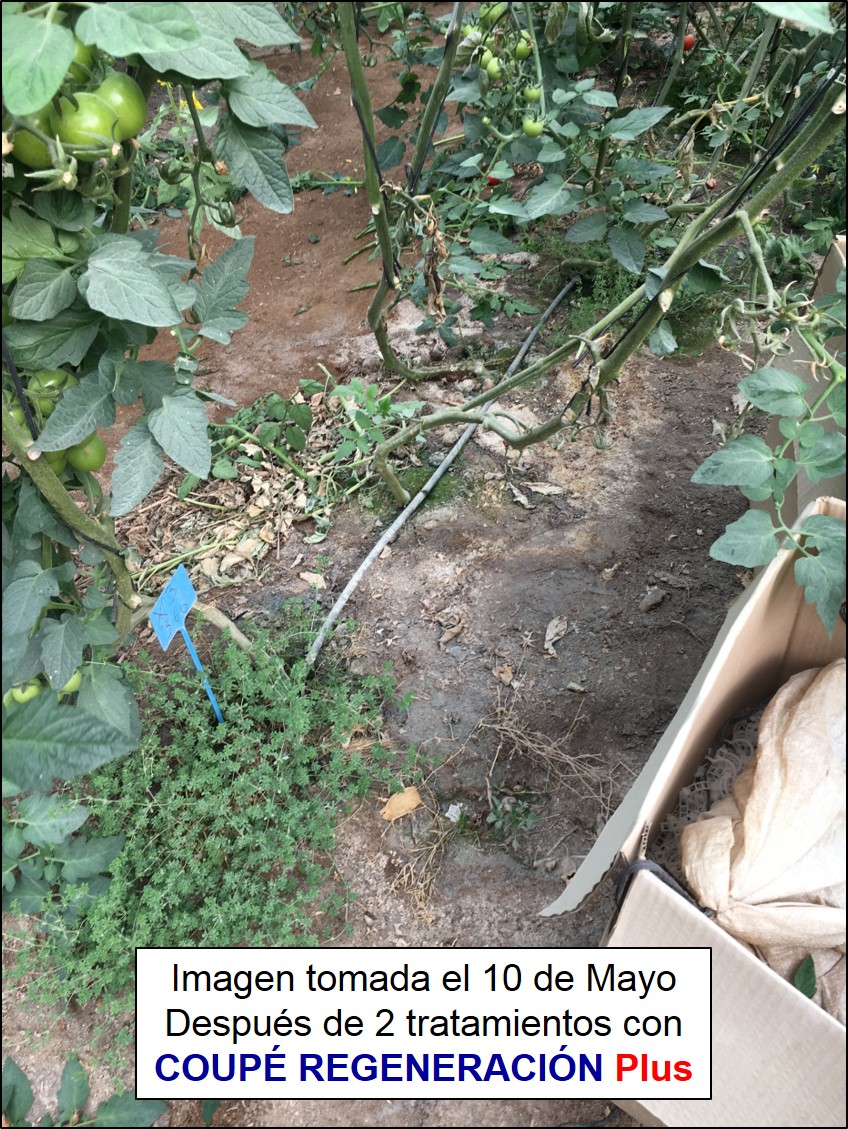
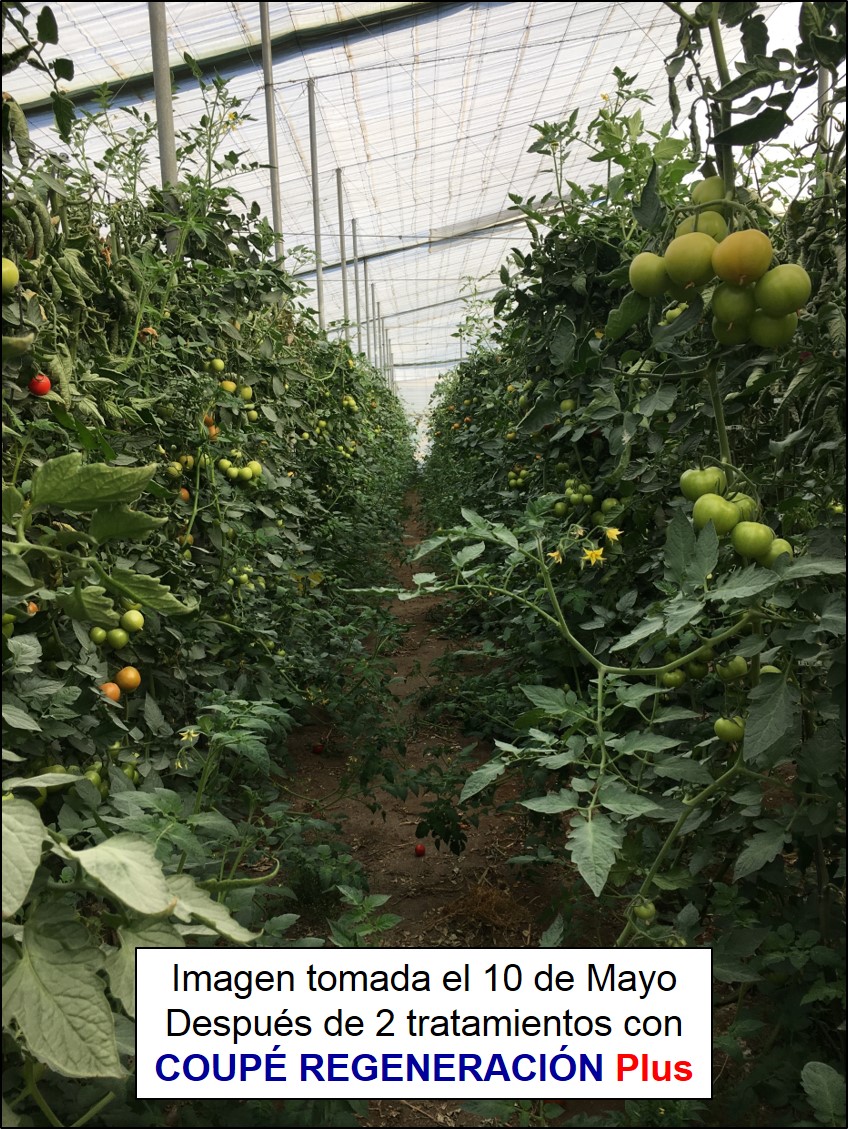
Today May 10th, just 25 days later, This crop has already demonstrated a radical change:
- The salt crust has been removed from the soil,
- The trunks of the plants have thickened,
- The fruits have taken on an intense green color, which is a sign of a correct thickening process.
This is how the crop can be seen in these images.