


The productive potential of crops is largely conditioned by the perspiration, which the plant performs through the leaves, during the process of daily photosynthesis.
In greenhouses, as time passes, a "pollution" is generated, which is deposited on the leaves and fixed by the humidity. atmospheric dew of the night.
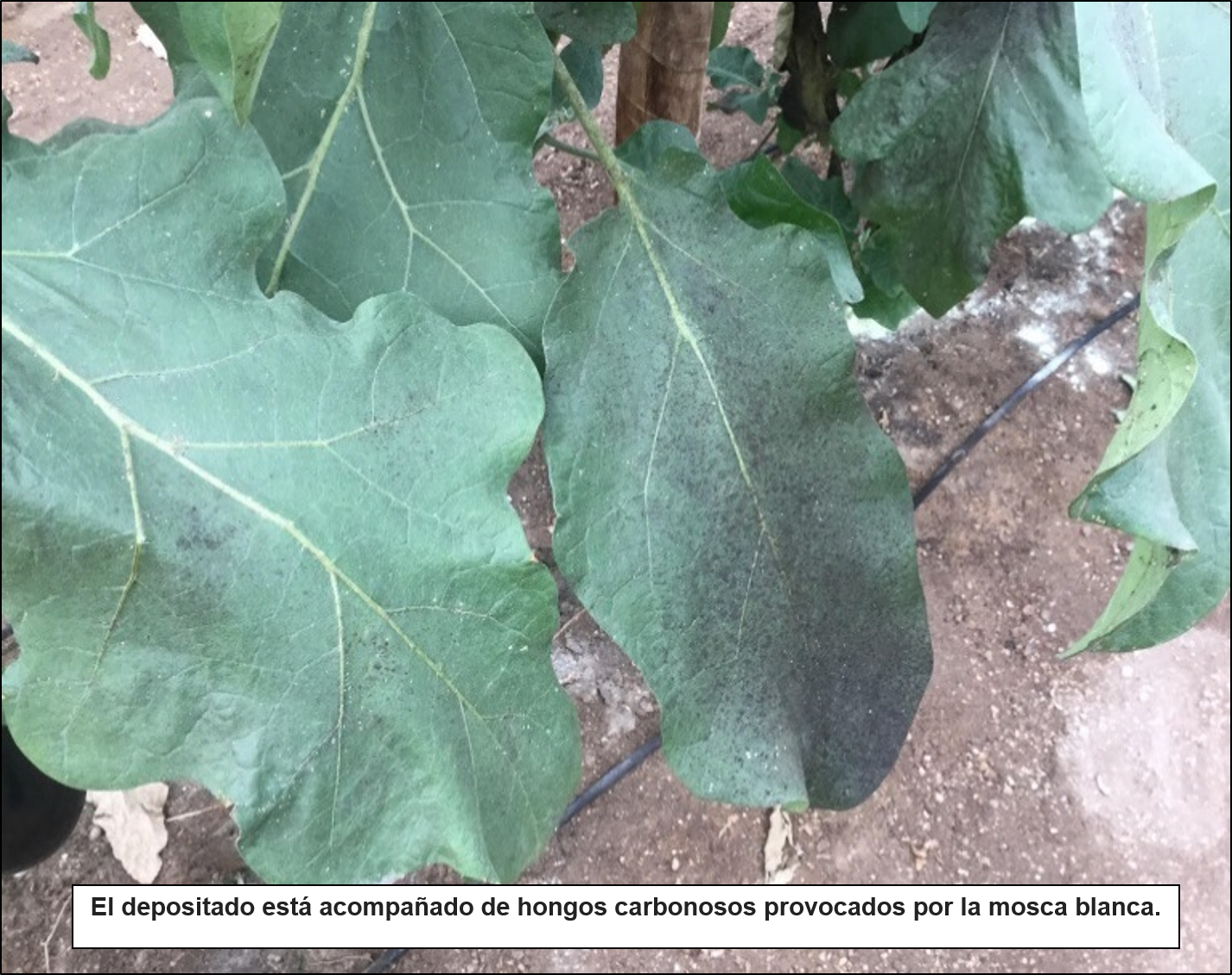
This coating on the crop hinders respiration through the stomata and reduces the level of photosynthesis and energy creation. the plant.
From EDYPRO, in our eagerness to achieve the continuous improvement in the production of crops under cover, We recommend a practical solution and effective, which at the same time allows them to obtain clean, shiny and well-presented fruit (some pests such as spider mites or fungi such as powdery mildew, They find in this deposited "pollution" that exists on the leaves, the perfect place to nest and reproduce).
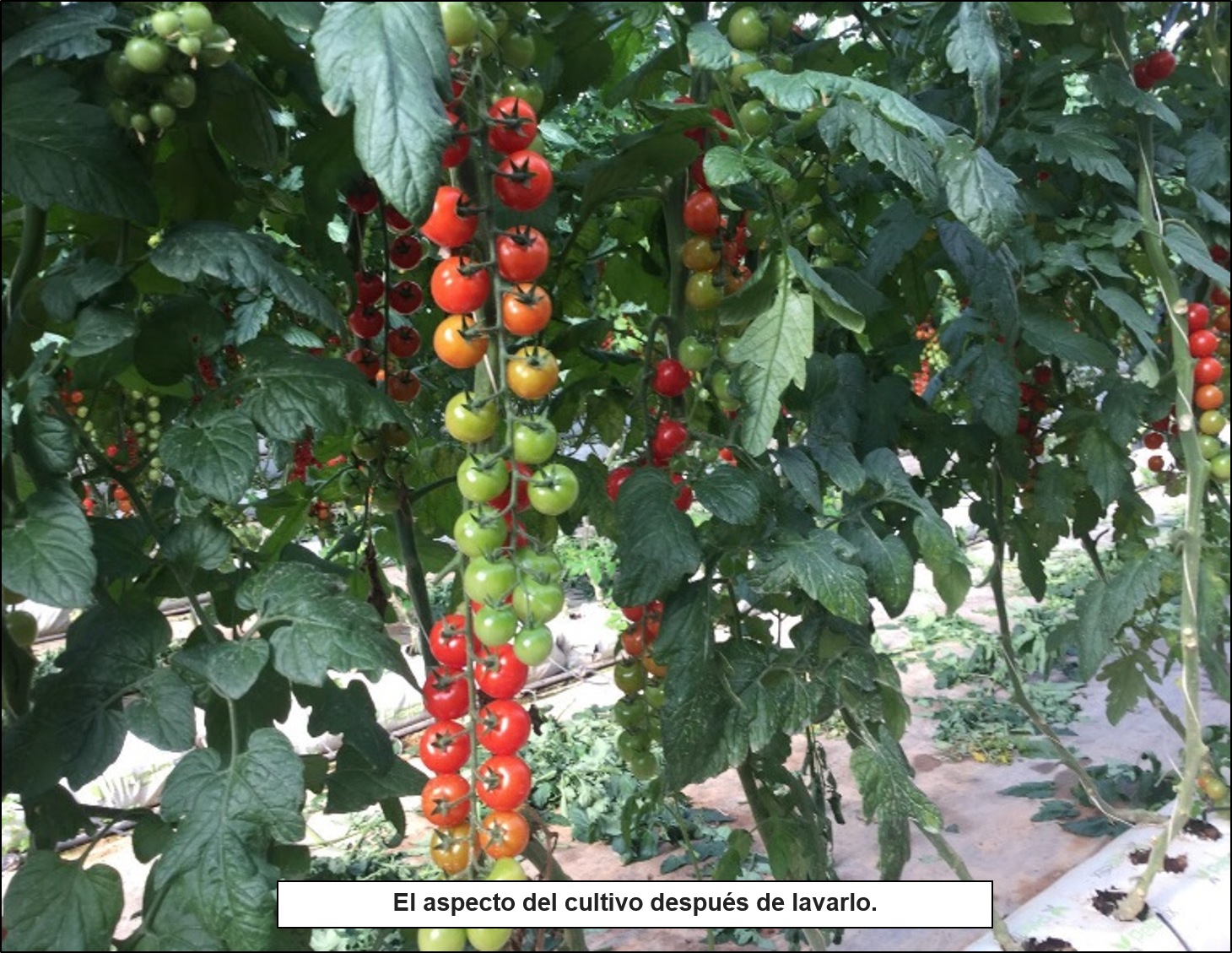
With the application of MELASTOP, 3 to 3.5 L x 1000 L applied with the conventional spray gun at a pressure of 30-35 atm and spraying from From top to bottom, the plant achieves an excellent It cleans the foliage and significantly improves the crop's condition..
At the same time, it is a product:
- Zero waste,
- Respect the assistants,
- It has a direct effect on winged insects such as adult whiteflies.
During the winter, proper ventilation is essential to reduce ambient humidity and thus prevent fungal infections. which cause Botrytis and Mildew attacks. The side and top (sky) windows are protected with mesh to prevent Insects can enter, but these nets, like the plant itself, eventually become clogged with "pollution," preventing proper ventilation. the greenhouses.
It is recommended to periodically wash the mesh when we see that the ventilation is insufficient.
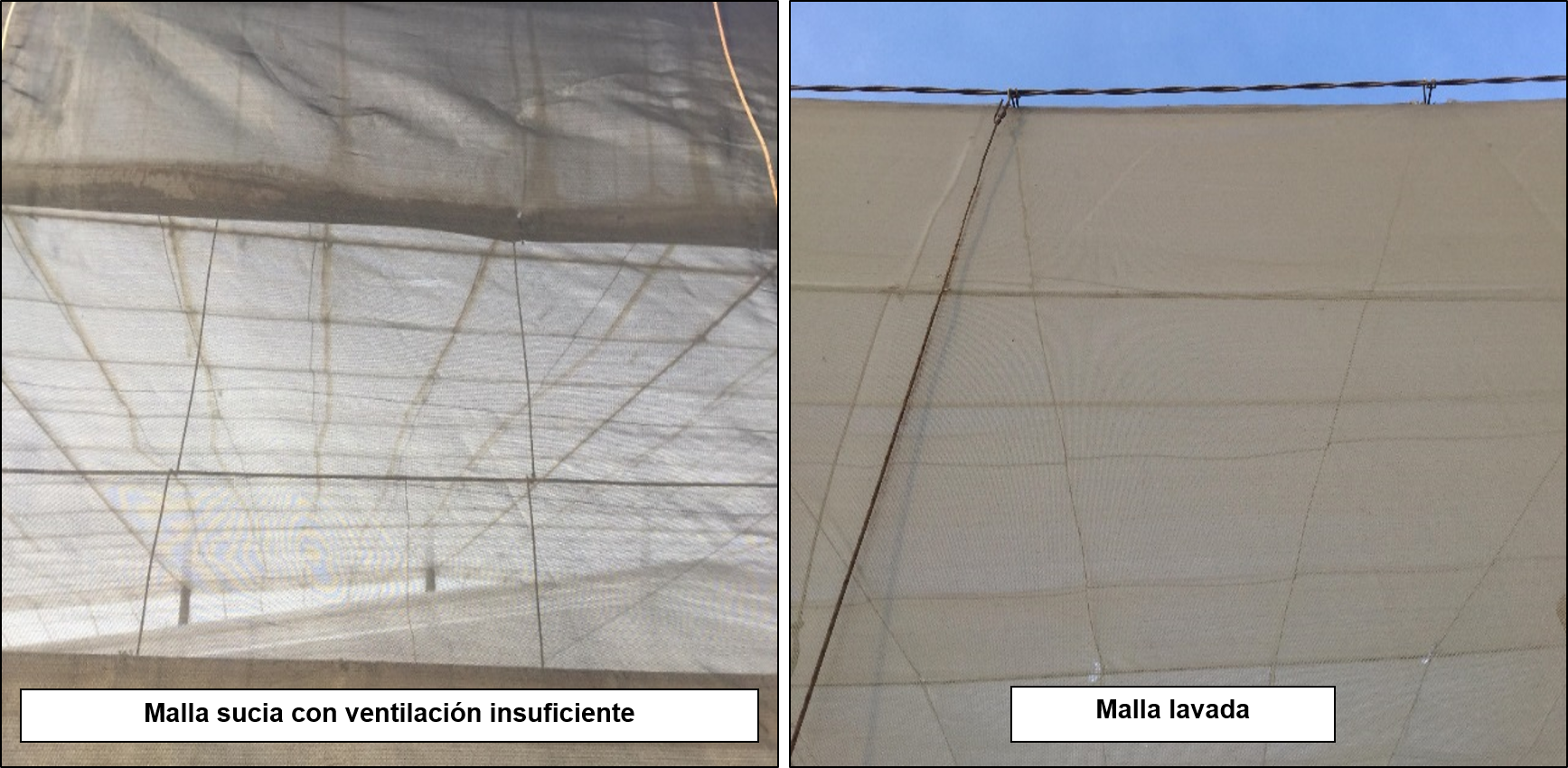
MELASTOP 4 to 5 L x 1000 L applied with the conventional "spray gun" at a pressure of 30-35 atm and spraying from top to bottom through the mesh, It achieves excellent cleaning.
This combination is also very useful for washing greenhouse covers when the plastic is several years old and dirt has accumulated. It prevents adequate light intensity, which is essential for proper plant growth. From mid-December to the end of January, the plants They have the greatest need for light, so now is the perfect time for this "washing," which your crop will appreciate.
